If you want to protect your eyesight, you may wonder which nutrients your eyes actually need. With so many vitamins, foods, and supplements promoted for eye health, it can be difficult to know what really matters.
The truth is that healthy eyes do not depend on one “magic” vitamin or supplement. A balanced diet that provides a variety of vitamins, minerals, carotenoids, and healthy fats can help support normal eye function and overall health.
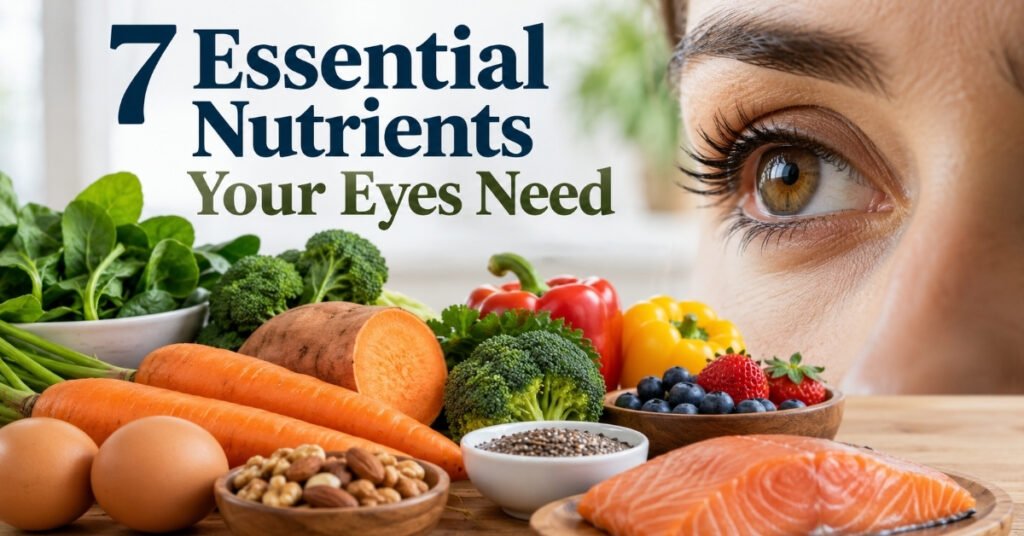
In this guide, we’ll look at seven important nutrients: vitamin A, lutein, zeaxanthin, vitamin C, vitamin E, zinc, and omega-3 fatty acids. Each has a different role, and getting them from a varied diet is generally a practical place to start.
It is also important to keep expectations realistic. Good nutrition can support eye health, but it cannot replace regular eye care, correct vision problems, or treat every eye condition. Some supplements have specific evidence for certain eye diseases and are not appropriate or necessary for everyone.
Table of Contents
The 7 Essential Nutrients Your Eyes Need
Your eyes rely on a range of nutrients to support normal vision and healthy tissues. Instead of focusing on one “best” vitamin, it is more useful to understand what different nutrients do and which everyday foods can provide them.
The first three to know are vitamin A, lutein and zeaxanthin, and vitamin C. They each support eye health in different ways.
Vitamin A: Important for Normal Vision
Vitamin A plays an important role in normal vision, including the ability to see in low-light conditions. Your body can get vitamin A directly from foods such as eggs and dairy products or make it from provitamin A carotenoids found in plant foods.
Good food sources include:
- Carrots and sweet potatoes
- Spinach and other leafy greens
- Eggs
- Dairy products
More is not necessarily better. High doses of preformed vitamin A from supplements can be harmful, so avoid taking high-dose vitamin A unless a healthcare professional recommends it.
Lutein and Zeaxanthin: Nutrients Found in the Retina
Lutein and zeaxanthin are carotenoids that are found in the retina and lens. They are particularly concentrated in the macula, an area of the retina involved in detailed central vision. Research has also examined these nutrients in relation to age-related macular degeneration (AMD).
You can find them naturally in foods such as:
- Spinach, kale, and other leafy greens
- Eggs
- Corn
- Peppers and other colorful vegetables
Including a variety of these foods in your regular diet is a practical way to increase your intake without immediately turning to supplements.
Vitamin C: An Antioxidant Nutrient
Vitamin C acts as an antioxidant, helping protect cells from damage caused by free radicals. Fruits and vegetables are the main dietary sources, making them an easy addition to an eye-friendly eating pattern.
Good sources include oranges and other citrus fruits, strawberries, bell peppers, broccoli, and tomatoes.
Adequate vitamin C is part of a balanced diet that supports overall health, but taking extra vitamin C should not be presented as a guaranteed way to prevent or treat an eye disease. For most people, getting nutrients from a varied diet is a sensible starting point.
Vitamin E: An Antioxidant Nutrient
Vitamin E is an antioxidant that helps protect cells from oxidative damage. For eye health, it is one of the antioxidant nutrients studied in the AREDS research, but that does not mean everyone needs a high-dose vitamin E supplement.
You can get vitamin E naturally from foods such as:
- Almonds and other nuts
- Sunflower seeds and other seeds
- Vegetable oils
- Peanuts
- Spinach and other green vegetables
For most people, a varied diet is a practical way to obtain vitamin E and other nutrients. High-dose supplements are different from the amounts naturally found in food, so taking them without a specific reason or professional guidance is not a good way to “boost” eye health.
Zinc: A Mineral Your Eyes Need
Zinc is an essential mineral involved in normal eye function and several processes related to vitamin A. It can be found in both animal and plant foods, making it possible to get zinc through a varied diet.
Good food sources include seafood, meat, dairy products, beans, nuts, and seeds.
Zinc is also included in the AREDS and AREDS2 formulations used for certain people with age-related macular degeneration (AMD). However, these are specific high-dose formulations intended for people who meet particular clinical criteria, not general eye-health supplements for everyone.
Taking excessive amounts of zinc can cause problems, including gastrointestinal symptoms and copper deficiency. If you are considering a high-dose zinc or eye-health supplement, discuss it with an appropriate healthcare professional first.
Omega-3 Fatty Acids: Important Fats for Overall Health
Omega-3 fatty acids are important fats found in foods such as salmon, sardines, and mackerel. DHA, one type of omega-3, is also an important component of retinal cells.
Plant foods can provide another type of omega-3 called ALA. Good sources include walnuts, chia seeds, and flaxseeds.
Eating omega-3-rich foods can be part of a balanced diet, but it is important not to confuse this with evidence that omega-3 supplements treat or prevent eye disease. In the AREDS2 clinical trial, omega-3 supplements did not provide an additional overall benefit against progression of AMD.
Vitamin D: Important for Overall Health
Vitamin D supports several important functions in the body, including bone and immune health. Your body can produce vitamin D when skin is exposed to sunlight, and you can also obtain it from foods such as fatty fish, egg yolks, and fortified foods.
Vitamin D is sometimes discussed in studies examining eye health, but an association between vitamin D levels and an eye condition does not prove that vitamin D supplements can prevent or treat that condition.
The practical takeaway is simple: aim for adequate vitamin D as part of overall health rather than taking high-dose vitamin D specifically to protect your eyes. If you have a vitamin D deficiency or are considering supplementation, a healthcare professional can help determine what is appropriate.
Best Foods to Get These Eye-Supporting Nutrients
You do not need a complicated meal plan to get nutrients that support eye health. The simplest approach is to eat a variety of vegetables, fruits, protein foods, nuts, seeds, and other nutrient-rich foods throughout the week.
Food also gives you more than one nutrient at a time. For example, leafy greens can provide lutein, zeaxanthin, vitamin C, and other nutrients, making them a useful addition to a balanced eating pattern.
Leafy Greens and Colorful Vegetables
Spinach, kale, broccoli, and other dark green vegetables are useful sources of carotenoids such as lutein and zeaxanthin. Colorful vegetables, including bell peppers, also provide vitamin C and other beneficial plant compounds.
Try adding a serving of leafy greens to lunch or dinner, or mix different colored vegetables into salads, soups, stir-fries, and other meals. Variety matters more than relying on one particular vegetable.
Eggs and Dairy Foods
Eggs provide several nutrients, including vitamin A, while egg yolks are also a source of lutein and zeaxanthin. Dairy foods such as milk and yogurt can provide vitamin A and other important nutrients, depending on the product.
You can make these foods part of everyday meals without treating them as special “eye-health foods.” For example, eggs can be added to breakfast or lunch, while plain yogurt can be paired with fruit and nuts.
Fish, Nuts, Seeds, and Legumes
Fatty fish such as salmon, sardines, and mackerel provide omega-3 fatty acids, including DHA. Nuts and seeds provide nutrients such as vitamin E, while beans and legumes can contribute zinc and other essential nutrients.
Simple options include:
- Add salmon or sardines to a meal when you eat fish.
- Sprinkle chia or ground flaxseed over yogurt or oatmeal.
- Keep a small portion of unsalted nuts as a convenient snack.
- Add beans or lentils to soups, salads, or main meals.
These foods support an overall nutrient-rich diet rather than acting as treatments for eye conditions.
Fruits Rich in Vitamin C
Citrus fruits, strawberries, kiwi, and other fruits can make it easier to get vitamin C through your diet. Bell peppers, broccoli, and tomatoes are also useful sources.
A practical approach is to add fruit to breakfast, choose it as a snack, or include berries or kiwi with yogurt. You do not need to rely on fruit juices when whole fruits are readily available.
A Simple Nutrient-to-Food Guide
| Nutrient | Key Food Sources | Main Role |
|---|---|---|
| Vitamin A | Sweet potatoes, eggs, spinach, dairy | Supports normal vision |
| Lutein & Zeaxanthin | Leafy greens, eggs, corn | Concentrated in the retina |
| Vitamin C | Citrus, berries, peppers, broccoli | Antioxidant function |
| Vitamin E | Nuts, seeds, vegetable oils | Antioxidant function |
| Zinc | Seafood, meat, beans, nuts, seeds | Supports normal eye function |
| Omega-3s | Fatty fish, chia, flax, walnuts | Essential fatty acids |
| Vitamin D | Fatty fish, fortified foods, egg yolks | Supports overall health |
The key takeaway is simple: build variety into your meals instead of searching for one “best” food for your eyes. A balanced diet can provide many of the nutrients your body needs while reducing the need to depend on high-dose supplements.
Can These Nutrients Actually Improve Your Eyesight?
If you are eating more eye-friendly foods, you may wonder: can they actually make your eyesight better? The answer depends on what you mean by “better eyesight.” Nutrition can support normal eye function, but it is not a replacement for vision correction or treatment.
Supporting Eye Health vs. Improving Vision
A nutrient-rich diet helps your body get the vitamins, minerals, and other nutrients it needs for normal eye function. However, eating more vitamin A, lutein, or another nutrient will not necessarily make your prescription glasses unnecessary or correct refractive errors such as nearsightedness.
Glasses, contact lenses, and appropriate medical treatment address specific vision or eye problems. Nutrition plays a different role: it supports your overall health and provides nutrients your eyes need.
What Research Says About Eye Health Supplements
The AREDS and AREDS2 clinical trials provide an important example of why context matters. The National Eye Institute found that specific high-dose supplement formulas can help slow progression from intermediate to advanced age-related macular degeneration (AMD). However, these benefits were seen in people with particular stages of AMD, not people without AMD or those with early AMD.
AREDS2 also showed that adding omega-3 supplements did not provide an additional overall benefit for slowing advanced AMD. The research therefore should not be interpreted as evidence that everyone should take an “eye health” supplement.
Why More Is Not Always Better
It can be tempting to think that taking larger amounts of vitamins and minerals will provide greater protection. That is not how nutrition works. High-dose supplements can have side effects, interact with medicines, or create problems when taken unnecessarily.
For most people, a varied diet is a sensible starting point. If you have an eye condition, take medications, or are considering a high-dose supplement, discuss it with your doctor or eye-care professional before starting it.
Common Nutrition Mistakes That May Affect Eye Health
Eating healthy foods is a good way to support your eyes, but a few common habits can make it harder to get the nutrients you need. Knowing what to avoid can help you make better choices without following complicated diets or spending money on unnecessary supplements.

Relying on One “Superfood”
Carrots are often associated with healthy eyesight, but eating carrots alone will not provide every nutrient your eyes need. Different foods supply different vitamins, minerals, and healthy fats.
Instead of focusing on one superfood, include a variety of leafy greens, colorful vegetables, fruits, nuts, seeds, and protein-rich foods in your meals. This helps you get a broader range of nutrients that support normal eye function.
Taking Supplements Without Checking the Evidence
Not every supplement marketed for eye health has proven benefits for everyone. Some products contain high doses of vitamins or minerals that may be unnecessary or potentially harmful.
Before choosing an eye health supplement, check its ingredients, nutrient amounts, and scientific evidence. For example, AREDS2 supplements are intended for certain people with age-related macular degeneration (AMD), not everyone who wants healthier eyes.
If you are unsure whether you need a supplement, ask your healthcare professional rather than relying on advertising claims.
Ignoring the Rest of Your Health
Healthy eyes depend on more than good nutrition. Your daily habits and overall health can also affect your risk of developing certain eye conditions.
The National Eye Institute recommends staying physically active, avoiding smoking, and managing conditions such as diabetes and high blood pressure to help protect your vision.
Start with small changes, such as walking regularly, eating balanced meals, and following your doctor’s advice for managing existing health conditions.
Skipping Regular Eye Examinations
Even if your eyesight seems normal, some eye diseases can develop without noticeable symptoms. A comprehensive dilated eye examination can help detect certain conditions before they cause significant vision loss.
How often you need an examination depends on factors such as your age, family history, and existing health conditions. People with diabetes, high blood pressure, or a family history of eye disease may need more frequent examinations.
Remember, nutritious foods support eye health, but they cannot replace professional eye examinations or necessary medical treatment.
How to Build an Eye-Healthy Eating Pattern
You do not need a complicated diet to support your eye health. The goal is to build simple eating habits that give your body a variety of nutrients over time. A balanced diet that includes vegetables, fruits, fish, and other nutrient-rich foods is recommended as part of healthy vision habits.
A Simple Daily Approach
Think about what you can add to your meals rather than trying to follow a strict diet.
- Add leafy greens such as spinach or kale to at least one meal.
- Include colorful fruits or vegetables throughout the day.
- Choose nutrient-rich protein foods such as eggs, beans, fish, or dairy.
- Include healthy sources of fat, such as nuts, seeds, or fish.
- Choose minimally processed foods more often and keep your meals varied.
You do not need to eat every nutrient-rich food every day. What matters more is creating a balanced pattern that you can maintain consistently.
A Simple Weekly Approach
Use the week to create variety. Include fatty fish such as salmon, sardines, or mackerel when it fits your diet. Rotate different fruits and vegetables instead of eating the same few foods repeatedly.
Also include nuts, seeds, legumes, and whole grains across your meals. This approach helps you obtain different nutrients without becoming overly focused on a single “eye-health” food.
Eye health is also connected with overall health. Regular physical activity, not smoking, and managing conditions such as diabetes and high blood pressure can help protect vision.
When to Talk to an Eye-Care Professional
Nutrition is only one part of protecting your vision. Do not wait for dietary changes to address a new or concerning eye symptom.
Seek prompt professional care if you experience:
- Sudden changes in your vision
- Persistent or intense eye pain
- A sudden increase in floaters
- Flashes of light
- A dark shadow or curtain across your vision
A sudden increase in floaters combined with flashes or a curtain-like shadow can indicate a retinal tear or detachment and requires immediate evaluation.
If you already have an eye condition or are considering supplements, speak with an eye-care professional about what is appropriate for you. Regular comprehensive eye examinations are also important because some eye diseases may develop before noticeable symptoms appear.
Conclusion
Supporting your eye health does not require a complicated diet or one special “eye-health” food. A varied diet that includes leafy greens, colorful fruits and vegetables, eggs, fish, nuts, seeds, and other nutrient-rich foods can help provide the nutrients your eyes need.
The key is consistency and variety. Focus on getting nutrients from balanced meals rather than taking high-dose supplements without a clear reason or professional guidance.
Remember that good nutrition is only one part of protecting your vision. Regular eye examinations, healthy lifestyle habits, and timely professional care are equally important, especially when you notice changes in your vision or have an existing eye condition.
Frequently Asked Questions
1. What nutrients are most important for eye health?
Vitamin A, lutein, zeaxanthin, vitamin C, vitamin E, zinc, and omega-3 fatty acids are important nutrients associated with normal eye function and overall eye health. A varied diet is generally the best way to obtain them.
2. Which foods are best for healthy eyes?
Leafy greens, colorful vegetables, eggs, fatty fish, nuts, seeds, beans, fruits, and fortified foods can provide several nutrients that support eye health. Eating a variety of these foods is more useful than relying on one “superfood.”
3. Can vitamins improve eyesight?
Vitamins can support normal eye function when your diet provides adequate nutrients, but they generally cannot correct refractive errors or replace glasses, contact lenses, or appropriate medical treatment. Specific supplements may benefit certain people with particular eye conditions.
4. Do I need an eye health supplement?
Not necessarily. Many people can get the nutrients they need through a balanced diet. Certain supplements, such as AREDS2, are intended for specific people with age-related macular degeneration and should not be treated as general-purpose eye supplements.
5. Can diet prevent eye diseases?
A healthy diet can support overall health and provide nutrients important for normal eye function, but it should not be described as a guaranteed way to prevent eye diseases. Regular eye examinations and appropriate medical care remain important for protecting vision.