Noise is part of everyday life. You may hear traffic during your commute, use headphones while working out, run loud appliances at home, or spend time around machinery, concerts, and sporting events. Most of these sounds seem normal, but repeated exposure to loud noise can put your hearing at risk.
The tricky part is that hearing damage may not be obvious right away. Your ears might feel normal even after repeated exposure, while problems can develop gradually over time. You may eventually notice ringing in your ears, muffled sounds, or difficulty following conversations in noisy places.
The good news is that protecting your hearing does not always require major changes to your routine. Small, consistent habits can reduce unnecessary noise exposure and help protect your hearing over time.
A simple approach is to remember four habits: lower it, move away, take breaks, and protect your ears. Lower the volume of headphones, music, or other sounds when you can. Move farther away from speakers, machinery, fireworks, or other loud sources. Take regular breaks from loud environments, especially during concerts or extended listening. When loud noise cannot be avoided, use appropriate hearing protection such as earplugs or earmuffs.
These habits matter because hearing risk depends not only on how loud a sound is, but also on how long and how often you are exposed to it. The CDC, WHO, and NIDCD recommend reducing exposure to loud sounds and using hearing protection when necessary.
Before spending time around a loud sound, ask yourself: “Can I lower it, move farther away, or take a break?” If you cannot, consider using appropriate hearing protection.
You do not need to wait until your ears start ringing or sounds become muffled before taking action. Building safer listening habits into your daily routine can help protect your hearing before problems become noticeable.
Table of Contents
Why Everyday Noise Can Affect Your Hearing
Not all hearing risks come from a single extremely loud sound. Repeated exposure to loud or moderately loud noise can also damage the delicate sensory cells involved in hearing. The risk generally increases when a sound is louder, you are closer to the source, or you stay around it for longer.
It’s Not Just Extremely Loud Sounds That Matter
Think about your typical day. You might listen to music through earbuds for an hour, travel beside heavy traffic, use power tools, and then watch television at night. Each situation may seem manageable on its own, but repeated noise exposure can add up.
Three factors are especially important:
| Factor | What it means |
|---|---|
| Loudness | The louder the sound, the greater the potential risk. |
| Distance | Being closer to a loud sound generally increases your exposure. |
| Exposure time | Spending more time around loud noise increases the overall exposure. |
This is why simply asking, “Is this sound loud?” does not tell the whole story. A sound that feels tolerable for a short period may become more concerning when you are exposed to it repeatedly or for a long time. NIDCD notes that repeated or prolonged exposure to sounds at or above 85 dBA can cause hearing loss.
Another problem is that hearing damage may develop gradually. You may not feel pain or notice an immediate change after every noisy experience. Over time, you might begin noticing ringing in your ears, muffled sounds, or difficulty understanding conversations.
What Everyday Noises Can Damage Hearing?
Common sources of potentially harmful noise include:
- Headphones and earbuds at high volume
- Heavy traffic and motorcycles
- Power tools and construction equipment
- Lawn mowers and other outdoor equipment
- Concerts and sporting events
- Fireworks
- Loud workplaces and industrial machinery
The goal is not to avoid every sound around you. Instead, pay attention to situations where noise is particularly loud, close, or prolonged. When you cannot avoid the noise, lowering the volume, increasing your distance, taking breaks, or using suitable hearing protection can help reduce your exposure.
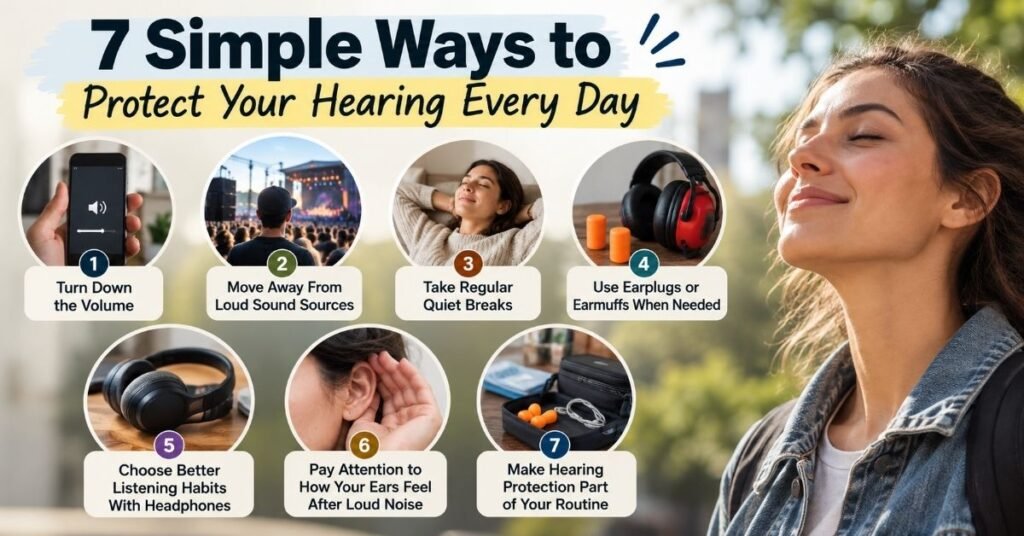
7 Simple Ways to Protect Your Hearing Every Day
Protecting your hearing does not have to be complicated. A few small changes can reduce how much loud sound reaches your ears and how long you are exposed to it. Here are practical habits you can start using today.
1. Turn Down the Volume
If you regularly use headphones or earbuds, check your volume before pressing play. WHO recommends keeping device volume at no more than 60% of maximum as a practical safe-listening measure. Well-fitted or noise-cancelling headphones can also help you hear clearly without turning the volume up to overcome background noise.
A simple habit: if you find yourself frequently increasing the volume in a noisy environment, consider moving somewhere quieter or using suitable noise-cancelling headphones instead.
2. Move Away From Loud Sound Sources
Distance can make a meaningful difference. Sound intensity decreases as you move farther from the source, so avoid staying close to loudspeakers, machinery, fireworks, or other powerful sound sources when possible.
At a concert or sporting event, for example, choose a position farther from speakers. Around machinery or outdoor equipment, step away when you do not need to be near the source.
3. Take Regular Quiet Breaks
Your ears need breaks from continuous loud sound. If you are spending time at a concert, sporting event, or another noisy setting, regularly move to a quieter area rather than staying around the noise continuously. WHO recommends taking a quiet 10-minute break after every hour in noisy environments.
The reason is simple: hearing risk increases with both sound level and exposure time. Reducing the amount of time you spend around loud noise reduces your overall exposure.
Before your next noisy activity, ask yourself: “Can I lower the volume, move farther away, or take a quiet break?” If you can, make that small change.
4. Use Earplugs or Earmuffs When Needed
If you know you will be around loud noise, hearing protection can reduce the amount of sound reaching your ears. This can be especially useful at concerts, sporting events, fireworks displays, construction areas, loud workplaces, or while using power equipment.
Earplugs and protective earmuffs work differently:
| Earplugs | Protective earmuffs |
|---|---|
| Fit inside the ear canal | Cover the entire outer ear |
| Small and easy to carry | Easy to put on and remove |
| Available in foam and reusable styles | Useful when earplugs are uncomfortable or difficult to fit |
| Proper insertion is important | A good seal around the ears is important |
Whichever you choose, fit matters. An incorrectly positioned protector may provide less protection than expected. Choose a comfortable option that you can wear correctly and consistently.
5. Choose Better Listening Habits With Headphones
Headphones are not automatically harmful to your hearing. The main concern is listening at excessive volume or for too long. Keep the volume at a comfortable level, and avoid increasing it simply to overpower background noise. WHO recommends keeping personal audio device volume at no more than 60% of maximum.
Well-fitted or noise-cancelling headphones can be helpful in noisy surroundings because they may reduce the need to turn up the volume. Taking regular breaks from extended listening also helps limit your overall exposure.
6. Pay Attention to How Your Ears Feel After Loud Noise
Your ears can give you useful warning signs after excessive noise exposure. Temporary ringing or buzzing, muffled hearing, or difficulty hearing clearly can occur after loud sounds.
Do not treat these signs as something to repeatedly ignore. If ringing persists or you continue having difficulty hearing conversations or certain sounds, consider getting your hearing evaluated by a qualified professional.
7. Make Hearing Protection Part of Your Routine
The easiest way to protect your hearing is to prepare before you encounter loud noise. Keep suitable earplugs or earmuffs readily available for activities such as:
- Concerts and sporting events
- DIY and home improvement projects
- Using power or lawn equipment
- Noisy workplace activities
- Travel or other consistently noisy environments
You do not have to wait until your ears hurt or start ringing before protecting them. Making hearing protection part of your routine helps you act before excessive exposure occurs. NIDCD recommends keeping hearing protectors handy for both expected and unexpected loud noises.
How to Know When a Sound May Be Too Loud
It is not always easy to judge whether a sound is loud enough to harm your hearing. You do not need a professional sound meter to notice every warning sign. A few simple checks can help you recognize when it is time to lower the volume, move away, or protect your ears.
The Shouting Test
Try this simple question: “Do I need to shout to be heard by someone nearby?”
If you have to raise your voice or shout to communicate with someone about an arm’s length away, the environment may be too loud. The CDC recommends using this as a practical warning sign of potentially hazardous noise.
You may also notice that your ears ring or sounds seem muffled after leaving a noisy environment. These signs are worth paying attention to, especially if they happen repeatedly.
Understanding Decibels Without the Confusion
Sound levels are measured in decibels, or dB. For hearing risk, you will often see the term dBA, which is a measurement adjusted to better reflect how the human ear responds to different frequencies.
As a general guide, NIDCD states that long or repeated exposure to sounds at or above 85 dBA can cause hearing loss. The louder the sound, the less time it can take to cause damage.
| Everyday sound | Approximate level |
|---|---|
| Normal conversation | 60–70 dBA |
| Lawnmower | 80–100 dBA |
| Motorcycle | 80–110 dBA |
| Concert or sporting event | 94–110 dBA |
| Emergency siren | 110–129 dBA |
| Fireworks | 140–160 dBA |
These are approximate ranges, not exact measurements. Actual levels can vary depending on the equipment, distance, environment, and other factors.
Remember the “Loud, Close, Long” Rule
A simple way to think about hearing risk is:
Loud + Close + Long = Greater Hearing Risk
These three factors work together. A sound becomes more concerning when it is very loud, you are close to its source, and you remain exposed for a long time. NIDCD specifically identifies loudness, distance, and exposure time as key factors affecting hearing risk.
So when you encounter loud noise, try to change at least one factor:
- Lower the volume.
- Move farther away.
- Reduce the amount of time you stay exposed.
- Use appropriate hearing protection when the noise cannot be avoided.
You do not need to memorize complicated numbers to make safer choices. If a sound is loud enough that you need to shout, your ears ring afterward, or you cannot comfortably communicate, treat it as a signal to reduce your exposure.
Protect Your Hearing in Common Everyday Situations
You do not need to avoid every noisy activity to protect your hearing. The practical goal is to recognize situations where noise may be excessive and reduce your exposure by lowering the volume, increasing your distance, taking breaks, or using appropriate hearing protection. The right approach can change depending on where you are and what you are doing.
At Home
Some household activities can create more noise than you might expect. You can reduce exposure by keeping noisy equipment away from your ears and limiting how long you use it.
- Keep television and music at a comfortable volume.
- Move away from loud vacuum cleaners when possible.
- Wear appropriate hearing protection when using power tools.
- Use hearing protection around lawn equipment such as lawnmowers and leaf blowers.
- Take breaks when working with noisy equipment for extended periods.
If you regularly use loud tools at home, keep suitable ear protection somewhere easy to reach. That makes it more likely you will actually use it.
While Traveling or Commuting
Traffic and transportation can expose you to continuous background noise, particularly during busy periods.
When possible, create more distance from loud sources such as motorcycles, heavy traffic, or construction equipment. On public transportation, consider moving away from particularly noisy areas when practical. At airports and other busy environments, take breaks in quieter areas if you are exposed to high noise levels for extended periods.
You should also avoid increasing your headphone volume simply to overcome surrounding noise. Lower-volume listening or suitable noise-cancelling headphones can help you avoid unnecessarily high volume.
At Concerts, Sporting Events, and Fireworks
These activities can involve very loud sounds, so a little preparation can make a difference.
- Stay farther away from speakers or other major noise sources.
- Take regular breaks in quieter areas.
- Use suitable hearing protection when needed.
- Avoid standing close to fireworks or other extremely loud sources.
NIDCD recommends using hearing protection during activities involving potentially hazardous noise, including concerts, sporting events, and fireworks.
At Work
Workplace noise can be particularly important because exposure may happen repeatedly over many days or years. If your job involves machinery, construction equipment, or other loud sources, follow your workplace hearing-safety procedures.
Identify noisy areas, use the required hearing protection correctly, and take quieter breaks when possible. Workplace hearing-conservation programs may also include noise monitoring and hearing testing for employees exposed to hazardous noise.
The key is simple: wherever you encounter loud noise, look for an opportunity to lower it, move away, reduce your exposure time, or protect your ears.
Conclusion
Protecting your hearing does not require complicated changes. Simple habits such as lowering the volume, moving away from loud sounds, taking regular quiet breaks, and using appropriate hearing protection can help reduce unnecessary noise exposure.
Pay attention to how your ears respond after loud activities. Ringing, muffled hearing, or difficulty hearing clearly can be signs that you have been exposed to too much noise.
Make hearing protection part of your everyday routine, especially during concerts, DIY projects, travel, and noisy work. Taking action early is a practical way to protect your hearing for the years ahead.
Frequently Asked Questions
1. What is the simplest way to protect your hearing?
Lower the volume, move away from loud sounds, take regular quiet breaks, and use appropriate hearing protection when you cannot avoid loud noise.
2. What volume is safe for headphones?
WHO recommends keeping personal audio device volume at no more than 60% of maximum as a practical safe-listening measure. Listening time also matters, so take regular breaks.
3. How do I know if a sound is too loud?
If you need to shout to communicate with someone nearby, the environment may be too loud. Ringing or muffled hearing after exposure can also be a warning sign.
4. Should I wear earplugs at concerts?
Yes, appropriate hearing protection can help reduce exposure to loud music. Staying farther from speakers and taking breaks in quieter areas can further reduce your exposure.
5. Can everyday noise cause hearing loss?
Yes. Repeated or prolonged exposure to loud noise can contribute to noise-induced hearing loss. Risk depends on factors such as sound level, distance from the source, and exposure time.