You brush your teeth twice a day, clean between your teeth, and do your best to maintain a healthy smile. But what if you still experience cavities, tooth sensitivity, or gum problems? It is natural to wonder whether something beyond your daily oral-care routine could affect your dental health.
Nutrition is one part of the bigger picture. Vitamin D plays an important role in calcium and phosphate metabolism, bone health, and immune function. Because these processes are connected to the health of your teeth and the tissues that support them, researchers have been studying the relationship between vitamin D and oral health.
However, vitamin D is not a replacement for brushing, flossing, regular dental checkups, or professional treatment. Having adequate vitamin D does not guarantee protection from cavities or gum disease, and research is still developing. Some studies have found associations between vitamin D status and oral health, but an association does not necessarily mean that low vitamin D directly causes a dental problem.
Vitamin D may support healthy teeth and gums by helping regulate calcium and phosphate metabolism, supporting bone health, and influencing immune responses. Understanding what vitamin D can and cannot do can help you make more informed choices about nutrition and your oral-health routine.
Table of Contents
What Does Vitamin D Have to Do With Your Teeth and Gums?
Vitamin D may seem unrelated to your daily dental routine, but it has several functions that matter to the health of your teeth and the tissues that support them. It helps regulate calcium and phosphate metabolism, supports normal bone metabolism, and influences immune function. Researchers have also identified vitamin D receptors in cells found in periodontal tissues, providing a biological reason to study its role in oral health.
The connection is easier to understand when you look at three areas: calcium absorption, the structures supporting your teeth, and your body’s immune response.
Vitamin D and Calcium Absorption
Calcium is an essential mineral for maintaining bones and supporting the mineralized tissues of your teeth. But your body needs vitamin D to help regulate calcium absorption and maintain normal calcium and phosphate balance.
This means vitamin D does not simply “strengthen your teeth” on its own. Rather, it helps create the conditions your body needs to properly use important minerals involved in bone and mineral metabolism.
A simple way to think about it is:
Vitamin D → helps regulate calcium and phosphate → supports normal mineral metabolism → contributes to healthy bones and teeth.
Getting adequate vitamin D is therefore one part of good nutrition, but it should not be viewed as a replacement for fluoride toothpaste, good oral hygiene, or regular dental care.
Vitamin D and the Tissues Supporting Your Teeth
Your teeth are held in place by more than what you can see in the mirror. The jawbone, periodontal ligament, gums, and other periodontal tissues work together to support each tooth.
Vitamin D is involved in bone metabolism, making it relevant to the jawbone and the structures around your teeth. Research has also identified vitamin D receptors in periodontal cells, including cells involved in bone and connective-tissue functions.
This is one reason researchers are investigating whether vitamin D status is related to periodontal health. However, finding a biological connection does not mean that vitamin D alone can prevent or treat gum disease.
Vitamin D and Immune Function
Your gums constantly interact with bacteria in the mouth. Your immune system helps control the body’s response to these microorganisms, while an excessive or prolonged inflammatory response can contribute to periodontal tissue damage.
Vitamin D has recognized roles in regulating parts of the immune system, which is another reason scientists are studying its relationship with gum health.
The important point is that vitamin D supports normal immune regulation; it should not be described as a direct way to prevent gum disease.
Current research continues to examine whether improving vitamin D status can meaningfully affect periodontal outcomes. Some studies suggest potential benefits in certain situations, while systematic reviews have found that the clinical evidence remains mixed.
So, what should you take away from this?
Vitamin D matters to oral health because it is involved in calcium and phosphate metabolism, bone health, and immune regulation. But healthy teeth and gums require a much broader approach that includes daily oral hygiene, a balanced diet, and appropriate professional dental care.
Can Low Vitamin D Affect Your Teeth and Gums?
Could you have low vitamin D without realizing it? It is possible. Limited sun exposure, low dietary intake, problems with vitamin D absorption, and certain health conditions can contribute to low vitamin D levels. A blood test can help assess vitamin D status when testing is appropriate.
Vitamin D helps regulate calcium and phosphate, which are important for normal bone and mineral health. Because teeth and their supporting structures depend on these processes, researchers have studied whether low vitamin D is linked to oral-health problems.
Vitamin D and Tooth Health
Some research suggests that low vitamin D may be associated with problems involving tooth mineralization and dental caries. However, the evidence is not consistent enough to say that vitamin D deficiency directly causes cavities.
Cavities are influenced by several factors, including oral bacteria, sugar intake, fluoride exposure, saliva, and oral hygiene. Vitamin D should therefore not be considered a standalone solution for preventing tooth decay.
Vitamin D and Gum Health
Research has also found an association between lower vitamin D levels and periodontal disease. Vitamin D’s roles in bone metabolism and immune regulation provide possible biological reasons for this connection. However, an association does not prove that vitamin D deficiency directly causes gum disease.
The practical takeaway is simple: adequate vitamin D is part of good nutritional health, but it cannot replace brushing with fluoride toothpaste, cleaning between your teeth, a balanced diet, or professional dental care.
Vitamin D and Gum Health: What Does the Research Show?
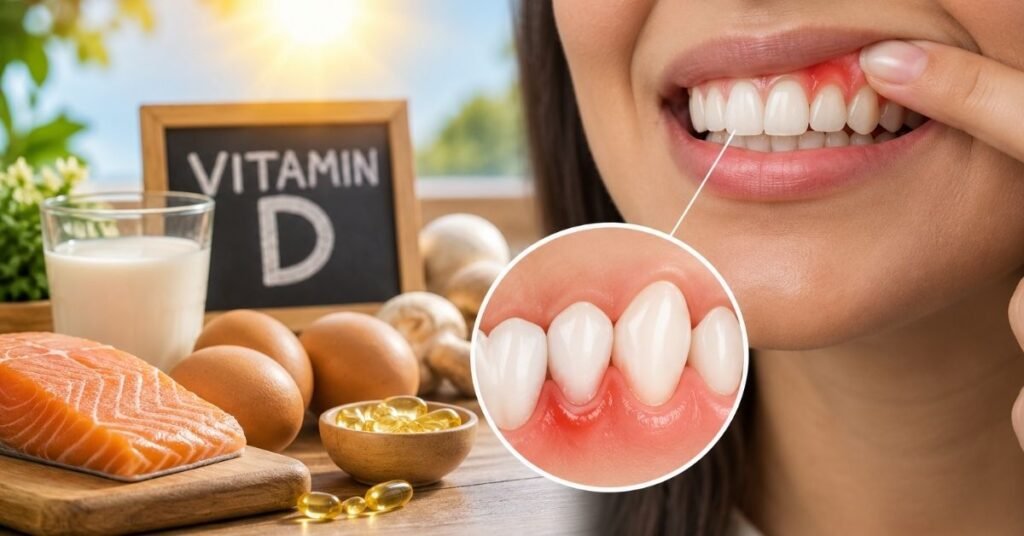
If you have bleeding, swollen, or irritated gums, you may wonder whether vitamin D has anything to do with it. Researchers have studied this connection because vitamin D is involved in immune regulation and bone metabolism, both of which are relevant to the tissues supporting your teeth.
What Does Research Say About Vitamin D and Gum Inflammation?
Gum inflammation can occur when bacteria and plaque trigger an immune response in the gums. If inflammation persists, it can contribute to periodontal disease and damage the tissues supporting your teeth.
Some studies suggest that vitamin D may influence inflammatory and immune responses in gum tissue. However, evidence from clinical trials is mixed, so vitamin D should not be considered a proven treatment for gum inflammation.
Is Low Vitamin D Linked to Periodontal Disease?
Several observational studies have reported an association between lower vitamin D levels and periodontitis. A systematic review found that much of the available evidence points toward this association, although the researchers noted that the evidence does not establish vitamin D deficiency as a direct cause of periodontal disease.
This distinction matters: people with low vitamin D may have a higher risk of periodontal problems, but other factors can also contribute to gum disease.
What About Vitamin D Supplements?
This is where the evidence becomes more important.
A systematic review and meta-analysis published in August 2026 examined randomized and controlled clinical studies. It found that adding vitamin D supplementation to non-surgical periodontal treatment did not significantly improve probing pocket depth or clinical attachment level. Some studies suggested possible reductions in gingival inflammation, but the overall evidence remains limited and inconsistent.
What the Research Says
| Question | Current evidence |
|---|---|
| Is vitamin D biologically relevant to gum health? | Yes |
| Is low vitamin D associated with periodontal problems? | Some studies report an association |
| Does vitamin D supplementation clearly treat gum disease? | Evidence is currently insufficient |
| Can vitamin D replace dental treatment? | No |
The practical takeaway: maintaining adequate vitamin D is important for overall health, but vitamin D supplements should not replace brushing, cleaning between your teeth, professional dental care, or evidence-based periodontal treatment.
Does Vitamin D Help Prevent Cavities and Tooth Decay?
Can vitamin D protect you from cavities? It may play a supporting role in normal tooth development and mineral metabolism, but current evidence does not establish vitamin D supplements as a standalone way to prevent tooth decay.
How Do Cavities Develop?
Cavities form when bacteria in dental plaque produce acids that gradually remove minerals from tooth enamel. Saliva and fluoride help repair and protect the enamel, but repeated acid exposure can eventually lead to decay.
This is why everyday habits matter more directly for cavity prevention. Brushing with fluoride toothpaste, cleaning between your teeth, limiting frequent sugary foods and drinks, and maintaining regular dental care can all help reduce your risk.
Where Does Vitamin D Fit In?
Vitamin D helps regulate calcium and phosphate metabolism, which are important for normal mineralization and tooth development. This provides a biological reason for researchers to investigate whether vitamin D status is connected to dental caries.
Some observational studies have found that children and adolescents with lower vitamin D levels may have higher odds of dental caries. However, research findings are not completely consistent, and an association does not prove that low vitamin D directly causes cavities.
Can Vitamin D Prevent Cavities?
Adequate vitamin D may support normal mineral metabolism and tooth development, but there is not enough evidence to recommend vitamin D supplements specifically as a cavity-prevention treatment.
Think of vitamin D as one part of overall nutritional health, not a substitute for proven dental-care practices.
What Actually Helps Protect Against Cavities?
For practical cavity prevention, focus on the basics:
- Brush twice a day with fluoride toothpaste.
- Clean between your teeth regularly.
- Limit frequent sugary foods and drinks.
- Maintain a balanced diet.
- Have regular dental checkups based on your dentist’s advice.
Fluoride has well-established benefits for preventing cavities, while vitamin D’s specific role in cavity prevention remains an area of ongoing research.
The key takeaway: having adequate vitamin D is important for normal health, but you should not rely on vitamin D supplements to prevent cavities. Good oral hygiene, fluoride, diet, and professional dental care remain essential.
How to Get Enough Vitamin D for Overall Health
Getting enough vitamin D does not mean taking large doses of supplements. For most people, the goal is simply to maintain adequate vitamin D through a combination of sensible sun exposure, food, and supplements when they are appropriate.
Vitamin D From Sunlight
Your skin can produce vitamin D when exposed to ultraviolet B (UVB) radiation from sunlight. However, the amount produced varies considerably depending on factors such as skin pigmentation, age, season, location, time of day, clothing, and how much skin is exposed.
There is no single sunlight schedule that works safely for everyone. Spending more time in the sun also increases exposure to ultraviolet radiation, which can damage the skin. Therefore, avoid treating prolonged sun exposure as a vitamin D treatment.
Vitamin D-Rich Foods
Food can help you maintain adequate vitamin D, although naturally vitamin D-rich foods are relatively limited.
Good sources include:
- Fatty fish such as salmon, trout, sardines, and tuna
- Egg yolks
- Fortified milk
- Fortified plant-based beverages
- Fortified cereals and other foods
Check food labels because the amount of vitamin D added to fortified products can vary.
Should You Take a Vitamin D Supplement?
Some people may need vitamin D supplements because of inadequate dietary intake, limited sun exposure, certain health conditions, or problems absorbing nutrients. A healthcare professional can help determine whether supplementation or testing is appropriate for you.
More is not necessarily better. Taking excessive amounts of vitamin D can cause harmful calcium levels and other health problems. The appropriate amount depends on factors such as age, diet, health status, and existing vitamin D levels.
For healthy teeth and gums, focus on overall nutritional adequacy rather than taking high-dose vitamin D specifically for dental benefits. Vitamin D supports important functions in the body, but supplements should not replace a balanced diet, good oral hygiene, or professional dental care.
Simple Ways to Protect Your Teeth and Gums Every Day
Healthy teeth and gums come from consistent daily habits, not from one vitamin or supplement. Vitamin D can support normal bone and mineral metabolism, but your everyday oral-care routine remains the foundation of good dental health.

Build a Simple Daily Oral-Care Routine
Keep these habits consistent:
- Brush your teeth twice a day with fluoride toothpaste.
- Clean between your teeth regularly using floss or another suitable interdental cleaner.
- Eat a balanced diet that provides essential vitamins, minerals, protein, and other nutrients.
- Limit frequent sugary foods and drinks, especially between meals.
- Get adequate vitamin D through appropriate food, sunlight, or supplementation when recommended for you.
- Don’t ignore bleeding, swollen, tender, or painful gums.
- Follow your dentist’s recommendations for checkups and preventive care.
Small habits performed consistently can help reduce your risk of common oral-health problems.
When Should You See a Dentist?
Some symptoms should not be explained away as a vitamin or nutrition problem. Make a dental appointment if you experience:
- Persistent gum bleeding or swelling
- Painful or tender gums
- Ongoing tooth sensitivity
- Persistent bad breath despite good oral hygiene
- Loose or shifting teeth
- Tooth pain that does not go away
- Changes, swelling, bleeding, or discomfort around dental implants
If symptoms persist or worsen, professional evaluation is important. A dentist can identify the underlying cause and recommend appropriate treatment.
The key takeaway is simple: maintain good oral hygiene, eat a balanced diet, get adequate nutrients such as vitamin D, and seek professional care when something does not feel right. Vitamin D can be part of a healthy lifestyle, but it should never replace proven dental-care practices.
Conclusion
Vitamin D plays an important role in calcium and phosphate metabolism, bone health, and immune function, making it relevant to the health of your teeth and gums. Research has also found associations between vitamin D status and some oral-health conditions, but this does not mean that vitamin D alone can prevent cavities or gum disease.
The best approach is to focus on the basics: brush twice a day with fluoride toothpaste, clean between your teeth, eat a balanced diet, limit frequent sugary foods and drinks, and maintain adequate vitamin D through appropriate food, sunlight, or supplementation when needed.
If you experience persistent bleeding gums, tooth pain, swelling, sensitivity, or other dental problems, don’t try to solve the issue with supplements alone. A dental professional can identify the cause and recommend the right treatment.
Healthy teeth and gums come from consistent oral care, good nutrition, and timely professional attention—not from relying on a single nutrient.
Frequently Asked Questions
1. Does vitamin D help keep your teeth healthy?
Vitamin D supports calcium and phosphate metabolism, which are important for normal bone and mineral health. It may therefore contribute to healthy teeth, but it cannot replace good oral hygiene or professional dental care.
2. Can vitamin D deficiency cause cavities?
A direct cause-and-effect relationship has not been established. Some research has found an association between low vitamin D levels and dental caries, but the evidence is inconsistent. Cavities are influenced by several factors, including bacteria, sugar intake, fluoride, and oral hygiene.
3. Is vitamin D good for your gums?
Vitamin D has roles in bone metabolism and immune regulation, and some studies have linked lower vitamin D levels with periodontal problems. However, there is not enough evidence to consider vitamin D supplements a standalone treatment for gum disease.
4. Should I take vitamin D supplements for healthier teeth and gums?
Not necessarily. Supplements may be appropriate when someone has inadequate vitamin D or is at risk of deficiency, but they should not be taken specifically as a replacement for dental care. A healthcare professional can help determine whether supplementation is appropriate.
5. Can vitamin D prevent tooth decay?
Adequate vitamin D supports normal mineral metabolism and tooth development, but current evidence does not establish vitamin D supplements as a standalone way to prevent cavities. Fluoride, regular brushing, cleaning between teeth, a balanced diet, and dental care remain important.